The Shift
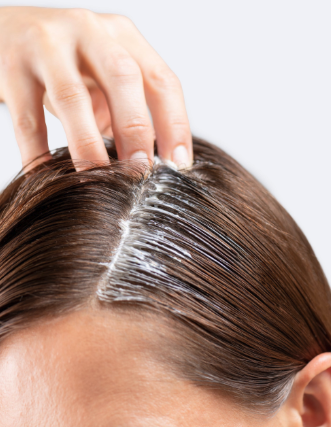
For decades, hair care marketing focused almost exclusively on the hair shaft — smoothing, volumising, strengthening the visible strands. The scalp was an afterthought, addressed only when problems (dandruff, itching, flaking) became impossible to ignore.
That's changing. The global scalp care market is projected to reach $15 billion by 2028, driven by a growing consumer understanding that the scalp is, fundamentally, skin — and it deserves the same attention.
Why Scalp Health Matters
The scalp is home to roughly 100,000 hair follicles, each embedded in a complex microenvironment of sebaceous glands, blood vessels, nerves, and immune cells. The condition of this environment directly determines:
- Hair growth rate — healthy follicles in well-vascularised scalp tissue grow hair more efficiently
- Hair thickness — follicle miniaturisation (shrinking) is often driven by scalp inflammation
- Hair retention — chronic scalp conditions can accelerate hair loss
- Hair appearance — excess sebum, flaking, and buildup at the roots affect how hair looks and behaves
Think of it like gardening: you can treat the plant above ground all you want, but if the soil is unhealthy, results will be limited.
What Actually Works
Ingredients with Evidence
Not everything marketed as "scalp care" is backed by science. Here are the ingredients with genuine evidence:
Salicylic acid (0.5-2%) — A beta-hydroxy acid that dissolves sebum and dead skin cells. Effective for buildup, mild flaking, and keeping follicle openings clear. Well-tolerated by most scalps.
Niacinamide (2-5%) — Strengthens the scalp barrier, reduces inflammation, and helps regulate sebum production. Increasingly appearing in scalp serums with good reason.
Zinc pyrithione (1-2%) — The gold-standard antifungal for managing dandruff caused by Malassezia yeast overgrowth. Decades of evidence behind it.
Piroctone olamine — A newer antifungal alternative to zinc pyrithione, effective at lower concentrations and considered gentler.
Caffeine (topical) — Some evidence suggests it stimulates hair follicles and may counteract the suppressive effects of testosterone on hair growth. Found in several clinical-grade scalp treatments.
Routines Worth Following
A sensible scalp care routine doesn't require a medicine cabinet's worth of products:
- Wash regularly — Letting sebum, sweat, and product accumulate does the scalp no favours. Wash every 2-3 days minimum (more often if you exercise frequently or have an oily scalp).
- Massage during washing — Use your fingertips (not nails) to massage the scalp for 3-4 minutes while shampooing. This improves circulation, aids in exfoliation, and feels excellent.
- Use a targeted treatment weekly — A salicylic acid or niacinamide scalp serum, applied once or twice a week, addresses buildup and maintains a healthy scalp environment.
- Protect from sun — The scalp is skin, and it can burn. If you have a visible parting or thinning hair, apply SPF along the part line or wear a hat.
What to Skip
The scalp care trend has generated its share of unnecessary products:
- Scalp toners — Usually just diluted witch hazel with fragrance. Your shampoo handles cleansing.
- Crystal-infused scalp mists — No evidence. None.
- Expensive scalp "detox" treatments — A good shampoo and occasional clarifying wash achieve the same thing.
- At-home microneedling devices — Derma-rolling the scalp has some clinical evidence when done professionally, but DIY devices risk infection and scarring.
The Brands Getting It Right
Several brands have launched scalp-focused lines with thoughtful formulations:
- The Ordinary — Their Multi-Peptide Serum for Hair Density applies skincare rigour to the scalp at an accessible price point
- Kérastase Symbiose — A well-formulated anti-dandruff line using piroctone olamine
- Act+Acre — Clean formulations with a focus on scalp health over hair cosmetics
The Bottom Line
Scalp care isn't a fad — it's a correction. Treating the scalp as an extension of your skincare routine is genuinely evidence-based. But like skincare, it doesn't need to be complicated or expensive. A good shampoo, occasional exfoliation, and one targeted treatment go a long way.
Disclaimer: This article is written by the Hairburst editorial team and reflects our own opinions. It is published on partner sites, including HairVits, for commercial and promotional purposes.